
GFRG CONSTRUCTION MANUAL
Introduction
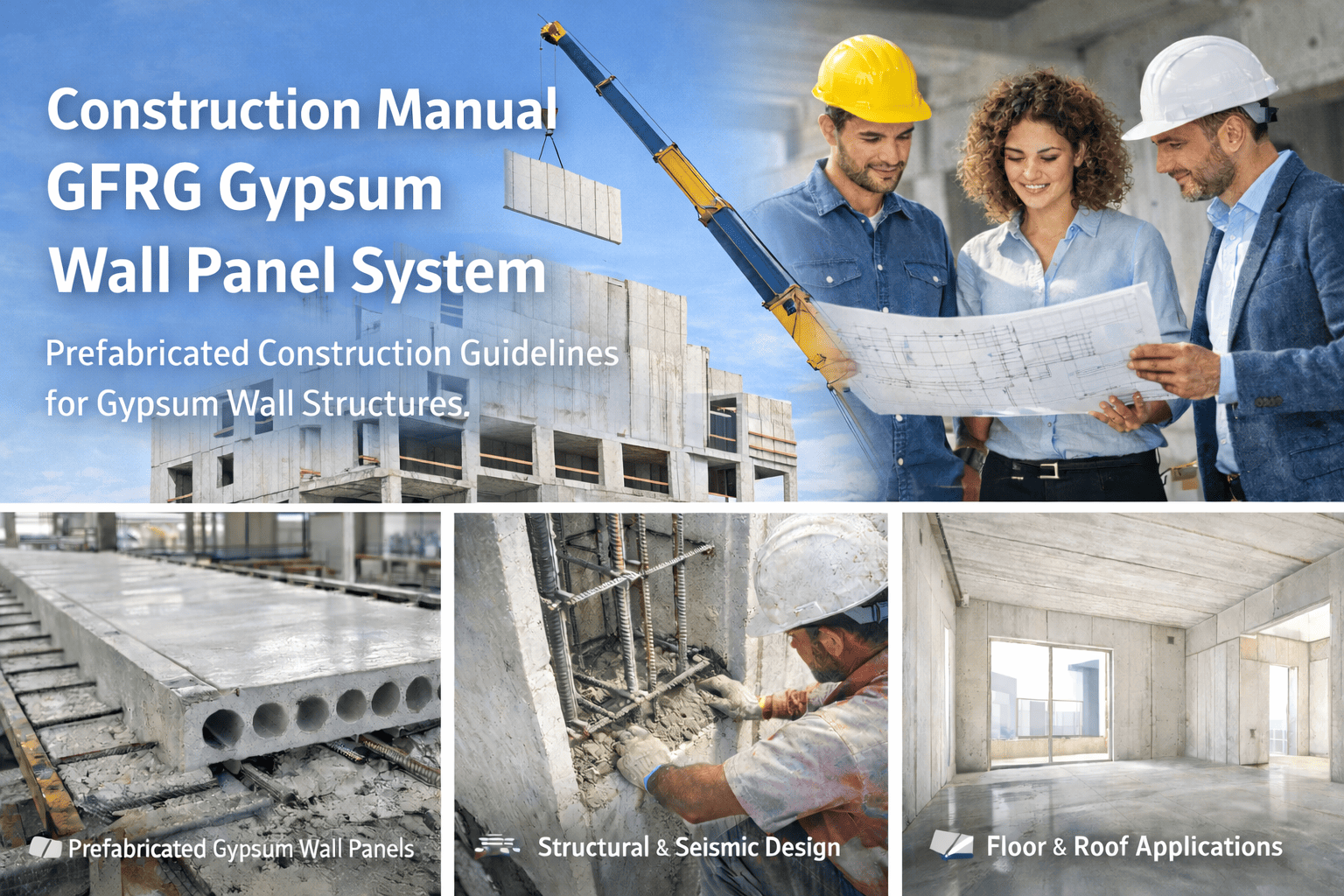
This construction manual presents a practical, execution-oriented approach to building using Glass Fibre Reinforced Gypsum (GFRG) based prefabricated wall panels. The focus of this document is on construction methodology, site execution, structural integration, joints, slabs, services, and speed of construction, making it a reliable reference for builders, contractors, engineers, and project managers.
GFRG-based construction enables fast-track, eco-friendly, and structurally efficient buildings, especially suitable for residential, commercial, institutional, and mass-housing projects.
Construction Philosophy Using GFRG Panels
GFRG construction follows the principle of industrialized building systems, where factory-manufactured panels are assembled on-site with controlled quality and minimal wet work. This approach significantly reduces construction time, material wastage, and labor dependency while ensuring uniformity and precision.
This method significantly improves construction efficiency by reducing overall project timelines, minimizing on-site material wastage, and lowering labor dependency.
Factory-made panels ensure consistent quality, dimensional accuracy, and seamless integration with RCC and prefab concrete systems, making the construction process faster, cleaner, and more predictable.
Wall Construction System Load Bearing Wall Construction
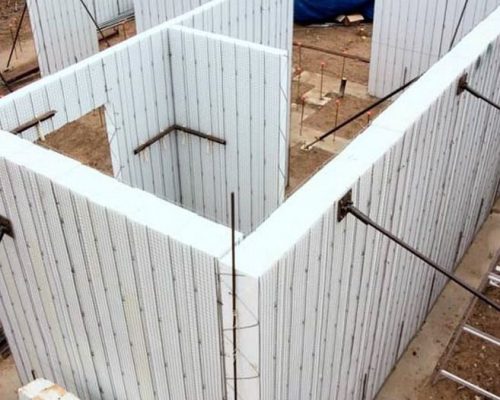
GFRG panels are extensively used as load-bearing wall elements in low-rise to multi-storey buildings. Depending on structural requirements, panels may be used without infill, with concrete infill, or with reinforced concrete infill. The infill process transforms the hollow panels into structurally efficient walls capable of transferring vertical and lateral loads safely to the foundation.
Starter bars connect the panels with plinth beams and slabs, ensuring continuity and monolithic structural behavior. Concrete infill is carried out through panel cavities, ensuring structural continuity from foundation to roof. Starter bars connect panels to plinth beams and slabs, creating a monolithic structural system.
Use as Filler Walls in RCC Frame Structures
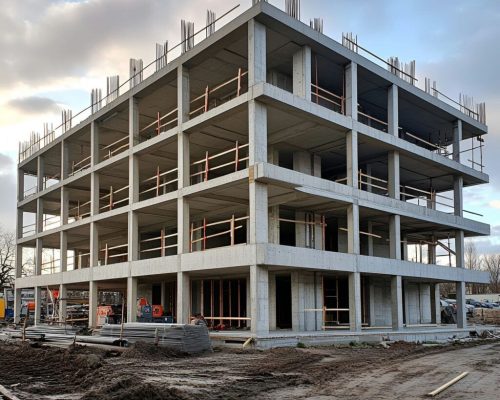
In framed RCC constructions, unfilled GFRG panels serve as high-performance filler walls. These panels are anchored to beams and columns using steel dowels and concrete infill, resulting in improved seismic performance and crack-free junctions. This approach allows rapid enclosure of RCC frames while maintaining structural stability and long-term durability.
Step-by-Step Construction Process
Construction Sequence
The construction process begins with preparation of the plinth beams or slabs by cleaning the surface and marking grid lines based on approved drawings. Panel locations, openings for doors and windows, and alignment references are carefully set out on site. Starter bars are then fixed into the concrete using drilling and epoxy grouting to ensure strong anchorage and alignment with panel cavities.
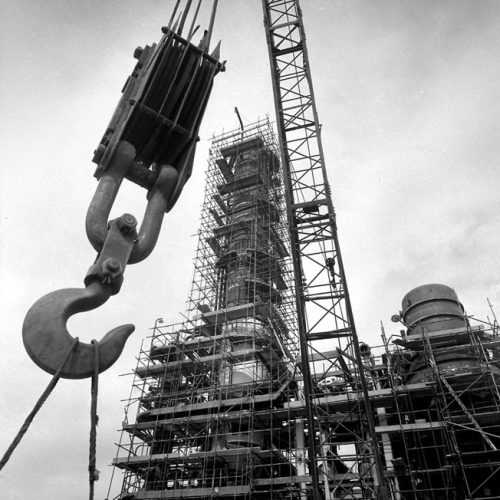
Panels are erected using mechanical or hydraulic lifting jaws and positioned accurately with proper plumbing and alignment. Temporary bracing is provided to hold the panels in position during erection. Structural joints are prepared by cutting panel webs where required and installing steel reinforcement cages. Concrete infill is carried out in controlled stages using free-flowing concrete to avoid damage and ensure proper compaction and curing.
Vertical Joint Systems (Structural Integration)
Vertical joints between wall panels play a critical role in overall building stability, especially in seismic and wind-prone zones. Various joint configurations such as corner joints, intersecting joints, straight joints, and multi-wall junctions are reinforced using vertical and horizontal steel ties. These joints are concreted to form continuous load paths, enabling the structure to behave as a single integrated system under gravity and lateral loads.
Floor & Roof Slab Construction
GFRG panels are effectively used as permanent formwork for floor and roof slabs. By forming micro beams within the panel cavities and filling them with reinforced concrete, structurally efficient slabs are created with reduced dead load. These slabs are tied to wall panels using horizontal tie beams and starter bars, ensuring proper load transfer and resistance to lateral forces such as earthquakes and wind.
Pitched Roof Construction
Pitched and sloping roofs can be easily constructed using GFRG panels, particularly for low-rise housing projects. Panels are placed at the required slope and integrated with ridge beams and wall panels through concrete infill. This roofing system enhances thermal comfort, reduces structural weight, and provides architectural flexibility, including the option to install traditional tile finishes.
Door, Window & Service Integration
Door and window frames are securely fixed by filling adjacent panel cavities with concrete, eliminating the need for conventional masonry supports in many cases. Electrical wiring and plumbing services are easily routed through the hollow cavities of the panels, allowing concealed installations without wall chasing. This significantly speeds up service work while maintaining a clean finish.
Construction Advantages on Site
GFRG-based construction offers substantial on-site advantages, including faster construction cycles, reduced curing time, minimal material wastage, and safer working conditions. The system aligns well with prefab and precast construction methodologies, making it suitable for large-scale and time-sensitive projects.
Sustainability in Construction
The construction methodology supports green building practices by reducing the use of natural resources and utilizing industrial by-products. GFRG construction lowers the overall carbon footprint of buildings and complies with modern sustainability and eco-friendly construction norms.